IELTS vs TOEIC vs Cambridge: Which English Exam Is Right for You?
Choosing between IELTS, TOEIC, and Cambridge exams? This guide compares all three: format, cost, recognition, and which one fits your goal.
Introduction
Three names dominate the English proficiency exam world: IELTS, TOEIC, and Cambridge. Each test a different set of skills, is recognised by a different set of institutions, and suits a different type of learner.
Picking the wrong exam can mean months of preparation for a certificate that your target employer or university does not accept. This guide explains the key differences so you can choose the right exam before you start studying.
Quick answer: IELTS is for academic and immigration purposes (universities, UK/Australia/Canada visas). TOEIC is for workplace communication (corporate HR departments, especially in Asia). Cambridge exams (B2 First, C1 Advanced) give you a permanent, level-specific qualification for study and work in Europe.
The Three Exams at a Glance
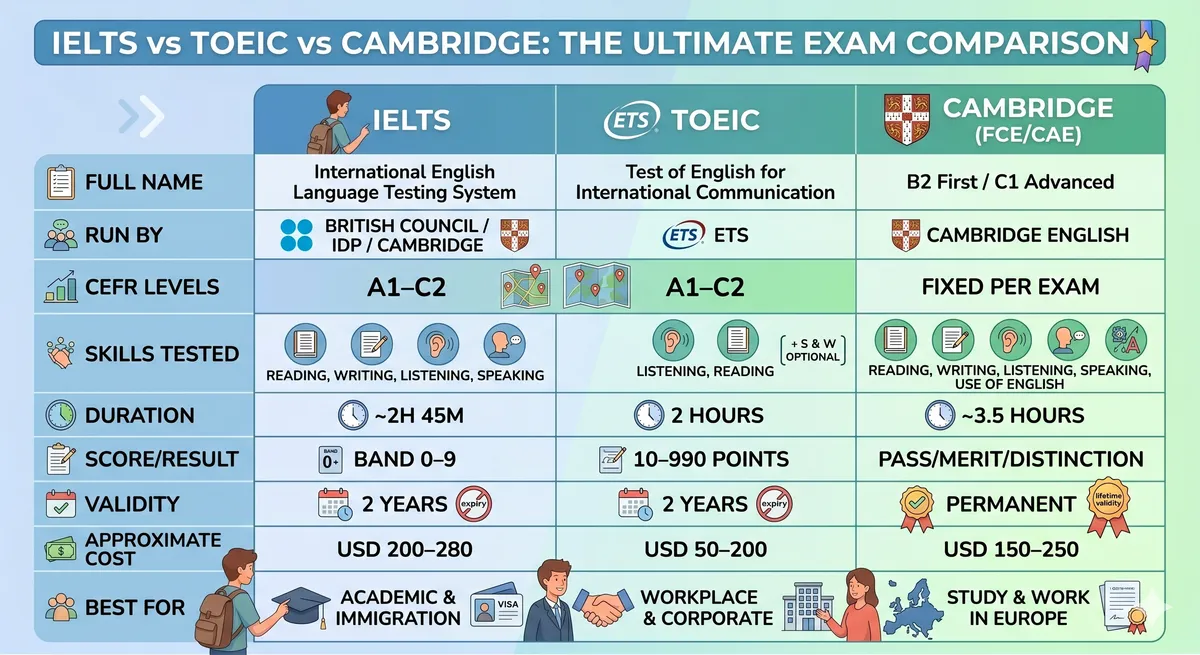
| IELTS | TOEIC | Cambridge (FCE/CAE) | |
|---|---|---|---|
| Full name | International English Language Testing System | Test of English for International Communication | B2 First / C1 Advanced |
| Run by | British Council / IDP / Cambridge | ETS | Cambridge English |
| CEFR level | A1–C2 (scored by band) | A1–C2 (scored by points) | Fixed per exam |
| Skills tested | Reading, Writing, Listening, Speaking | Listening, Reading (+ Speaking & Writing optional) | Reading, Writing, Listening, Speaking, Use of English |
| Duration | ~2h 45m | 2 hours (core) | ~3.5 hours |
| Score/Result | Band 0–9 | 10–990 (Listening + Reading) | Pass/Merit/Distinction |
| Result validity | 2 years | 2 years | Permanent |
| Approximate cost | USD 200–280 | USD 50–200 (varies by country) | USD 150–250 |
| Best for | Academic & immigration | Workplace & corporate | Study & work in Europe |
IELTS: Who It Is For
IELTS (International English Language Testing System) is the world's most widely taken English proficiency test, with over 3 million tests administered annually.
Two versions
| Version | Who takes it | Focus |
|---|---|---|
| IELTS Academic | University applicants, professional registration (doctors, nurses, engineers) | Academic reading and writing tasks |
| IELTS General Training | Immigration (UK, Canada, Australia), secondary education, workplace | Everyday English + formal letters |
IELTS scoring
IELTS uses a 9-band scale. The overall Band Score is the average of four skill scores:
| Band | CEFR | What it means |
|---|---|---|
| 9 | C2 | Expert user |
| 8 | C1 | Very good user |
| 7 | C1 | Good user |
| 6 | B2 | Competent user |
| 5 | B1/B2 | Modest user |
| 4 | B1 | Limited user |
Typical IELTS requirements
- UK university undergraduate: 6.0–6.5
- UK university postgraduate: 6.5–7.0
- UK Skilled Worker visa: 5.5–6.5 (depending on role)
- UK Spouse visa: 4.0 (A2 Life Skills test often required instead)
- Australian immigration (most streams): 6.0–7.0
IELTS strengths and limitations
Strengths:
- Accepted by 11,000+ institutions in 140+ countries
- Two formats (Academic and General) for different goals
- Recognised by UK/Australia/Canada/New Zealand immigration authorities
Limitations:
- Results expire after 2 years
- Writing and Speaking sections are examiner-marked (some subjectivity)
- Academic Task 1 (describe a graph/chart) is a very specific, taught skill
TOEIC: Who It Is For
TOEIC (Test of English for International Communication) is the dominant workplace English test globally, with approximately 7 million tests taken per year, mostly in Asia, particularly Japan, South Korea, Vietnam, and France.
TOEIC format
The core TOEIC test covers only Listening and Reading:
| Section | Questions | Time |
|---|---|---|
| Listening Comprehension | 100 questions | 45 minutes |
| Reading Comprehension | 100 questions | 75 minutes |
| Total | 200 questions | ~2 hours |
Optional add-ons: TOEIC Speaking & Writing (separate test, USD 80–150 extra)
TOEIC scoring
| Score | CEFR equivalent | What it signals |
|---|---|---|
| 945–990 | C1 | Can function effectively at the highest professional level |
| 785–940 | B2 | Can communicate well in most professional contexts |
| 550–780 | B1 | Can handle routine professional communication |
| 225–545 | A2/B1 | Limited to familiar professional contexts |
Typical TOEIC requirements
- Vietnam: Government employees often required to have 450+ (B1)
- South Korea: Many corporations require 700–800 for promotion
- Japan: TOEIC 730+ is a common corporate benchmark
- France: University graduation requirements in some institutions (785)
- European employers: Less common; IELTS or Cambridge are more recognised
TOEIC strengths and limitations
Strengths:
- Cheaper and shorter than IELTS or Cambridge
- Highly relevant for corporate environments in Asia
- Can retake frequently (no 2-year restriction on retaking)
- Listening section reflects real workplace conversations
Limitations:
- Only tests Listening and Reading in the core exam (no writing, no speaking)
- Less recognised outside of Asia for immigration or academic purposes
- Does not give you a CEFR certificate, only a score
Cambridge English: Who It Is For
Cambridge English exams are level-specific: you choose B2 First (FCE) or C1 Advanced (CAE) and study for that exact level. Unlike IELTS or TOEIC, Cambridge results do not expire.
The Cambridge ladder
| Exam | CEFR | Best for |
|---|---|---|
| A2 Key (KET) | A2 | Beginners, young learners |
| B1 Preliminary (PET) | B1 | Intermediate learners |
| B2 First (FCE) | B2 | Most common adult exam |
| C1 Advanced (CAE) | C1 | University, professional contexts |
| C2 Proficiency (CPE) | C2 | Near-native level |
B2 First (FCE) format
| Paper | Tasks | Time |
|---|---|---|
| Reading & Use of English | 52 questions | 75 minutes |
| Writing | 2 tasks (essay + choice) | 80 minutes |
| Listening | 30 questions | 40 minutes |
| Speaking | Discussion with partner | 14 minutes (per pair) |
Cambridge results
| Grade | CEFR | Certificate says |
|---|---|---|
| A | C1 | Awarded B2 First with Grade A |
| B | B2 | Awarded B2 First with Grade B |
| C | B2 | Awarded B2 First with Grade C |
| Level B1 | B1 | Not awarded (reported only) |
Note: Scoring high on B2 First earns you a C1 certificate, a common way to demonstrate C1 level. (For the grammar and vocabulary that actually distinguish a C1 candidate from a strong B2 candidate, see what C1 (Advanced) English looks like in practice.)
Cambridge strengths and limitations
Strengths:
- Results never expire; your certificate is valid for life
- Widely recognised in the UK, Europe, and Latin America
- Tests all four skills plus grammar (Use of English section)
- Progression between levels feels natural and motivating
Limitations:
- Less recognised in Australia and New Zealand for immigration
- Not available in all countries
- Does not give you a TOEIC score for Asian corporate requirements
Which Exam Is Right for You?
Use this decision guide:
| Your goal | Choose |
|---|---|
| UK university | IELTS Academic (6.0–7.0 depending on course) |
| US university | TOEFL iBT (not IELTS; check institutional policy) |
| UK/Australia/Canada immigration | IELTS General Training |
| European university or job | Cambridge B2 First (FCE) or C1 Advanced (CAE) |
| Corporate career in Asia | TOEIC (Listening & Reading) |
| Permanent, portable English qualification | Cambridge (never expires) |
| Professional registration (doctor, nurse, engineer in UK) | IELTS Academic (usually 7.0+) |
How to Prepare for Each Exam
IELTS preparation tips
- Practise graph description (Academic Task 1) with real IELTS graphs
- Time yourself strictly, as the exam has rigid time limits
- Use Cambridge IELTS official practice tests (1–18)
- Study common IELTS vocabulary themes: environment, technology, health
TOEIC preparation tips
- Focus on listening stamina: 100 questions in 45 minutes is fast
- Learn business English vocabulary and common workplace scenarios
- Practise Part 7 (long reading passages), where most test-takers run out of time
- Use official ETS TOEIC practice tests
Cambridge (FCE/CAE) preparation tips
- Study the Use of English section specifically; it is unique to Cambridge
- Practise writing in the Cambridge style: clear topic sentences, cohesive paragraphs
- Learn set phrases for the Speaking test (agreeing, disagreeing, speculating)
- Use Cambridge English official Masterclass or Ready for FCE/CAE coursebooks
Practice Now
EngQuiz Pro has free grammar exercises targeting the exact structures tested in IELTS, TOEIC, and Cambridge exams, with no sign-up required. Start with the level and grammar point most relevant to your exam.
Frequently Asked Questions
They test different things. IELTS includes Writing and Speaking (which are subjectively marked), requiring broader production skills. TOEIC is multiple-choice only. For most learners, IELTS is harder because it demands accurate writing under time pressure.
TOEIC is rarely accepted for academic admission. Most universities in the UK, Europe, and the US require IELTS Academic or TOEFL iBT. Check your target institution's policy before starting preparation.
TOEIC is the most common exam for workplace use in Vietnam, required by many government agencies and corporations. For study abroad, IELTS Academic is required by most foreign universities. Cambridge B2 First is increasingly accepted by international secondary schools and some universities.
No. Cambridge English certificates (B2 First, C1 Advanced, C2 Proficiency) are valid for life. IELTS and TOEIC results expire after 2 years. This makes Cambridge a better long-term investment for non-time-sensitive goals.
It depends on the country. The UK requires IELTS for most skilled worker visas. EU countries generally accept Cambridge or IELTS. France specifically recognises TOEIC for some professional contexts. Always check the target country's government website for the current accepted tests.
New Articles
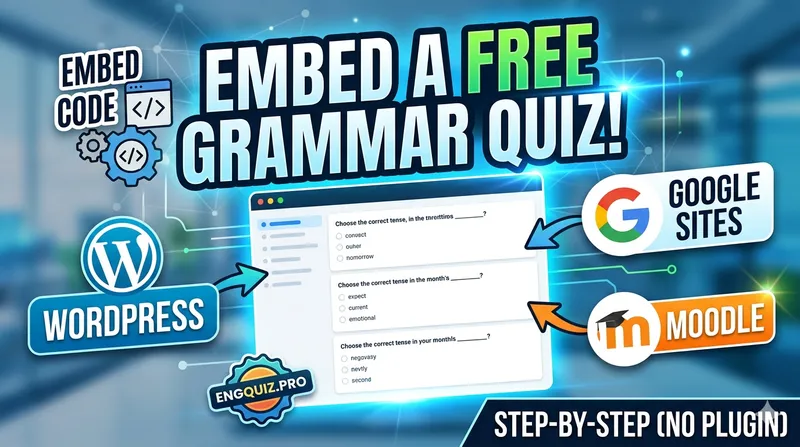
How to Embed a Free English Grammar Quiz on Your Website (WordPress, Google Sites, Moodle)
Step-by-step instructions for adding a free, interactive English grammar quiz to WordPress, Google Sites, Moodle, or any page that accepts HTML. No plugin, no sign-up, no ads.
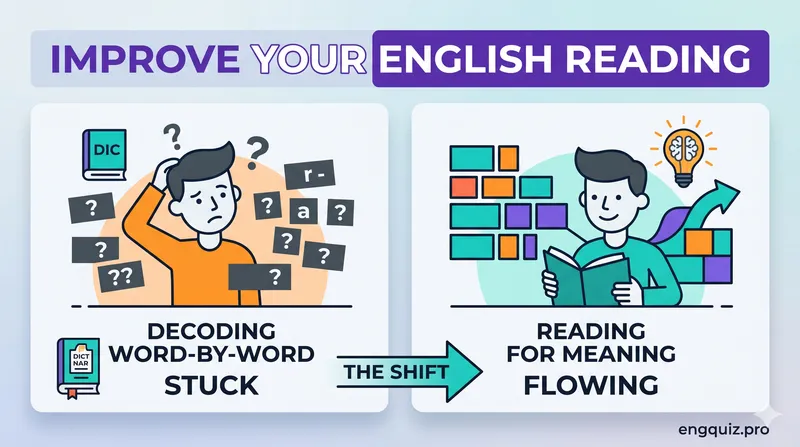
How to Improve English Reading and Actually Understand It
Why the level of the text you choose matters more than the hours you put in, and five exercises that build reading comprehension.
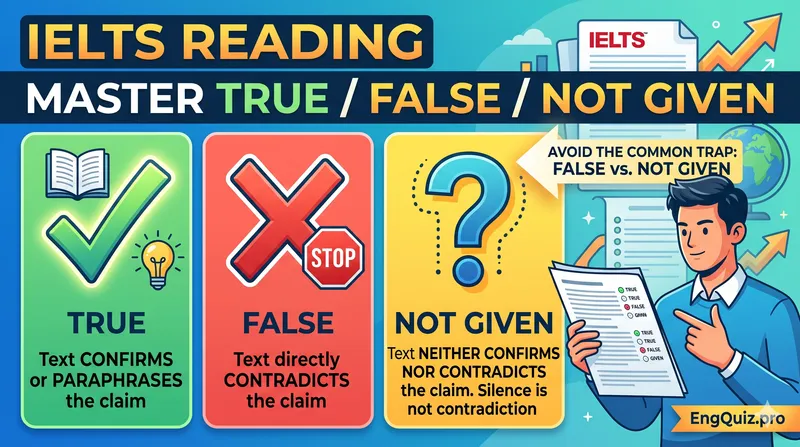
IELTS Reading: How to Master True/False/Not Given
True/False/Not Given is the most-failed IELTS Reading task. Learn the one rule that fixes it, and practise free on real B2/C1 passages with instant feedback.
Related Articles
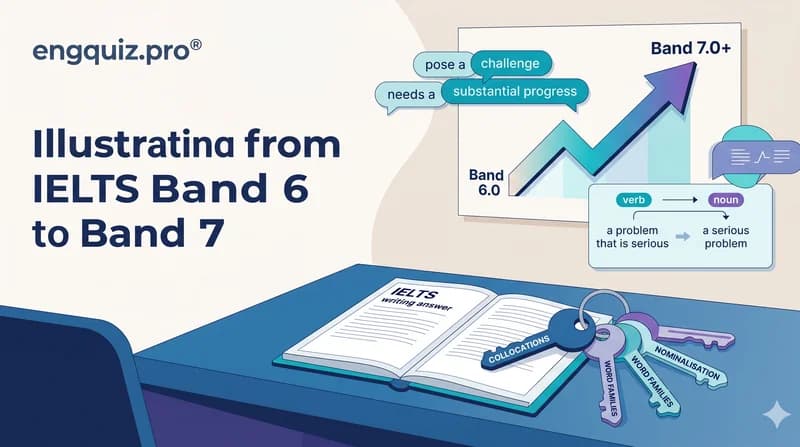
Academic Vocabulary for IELTS Writing: How to Move From Band 6 to Band 7
Lexical Resource is 25% of your IELTS Writing score, and most learners attack it backwards. Here is what Band 7 vocabulary actually looks like, and how to get there.
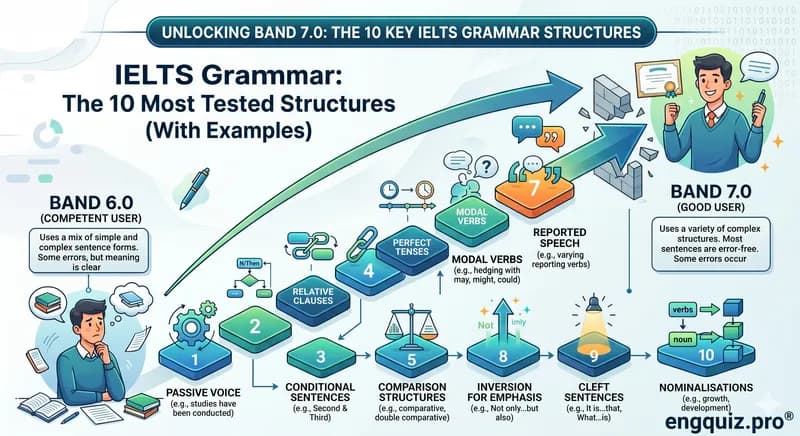
IELTS Grammar: The 10 Most Tested Structures (With Examples)
Master IELTS grammar by targeting these 10 structures, the ones that separate Band 6.0 from Band 7.0 in Writing and Speaking. Examples + exercises.
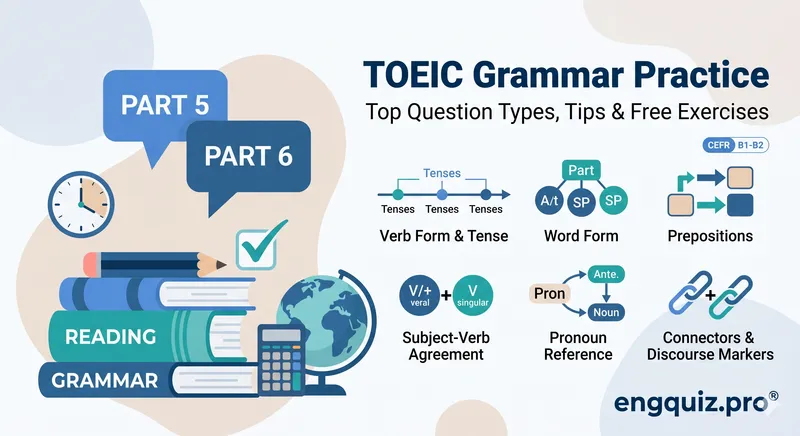
TOEIC Grammar Practice: Top Question Types, Tips & Free Exercises
Preparing for TOEIC? This guide covers the top grammar patterns tested in the TOEIC Reading section, with practice tips and free exercises at B1–B2 level.