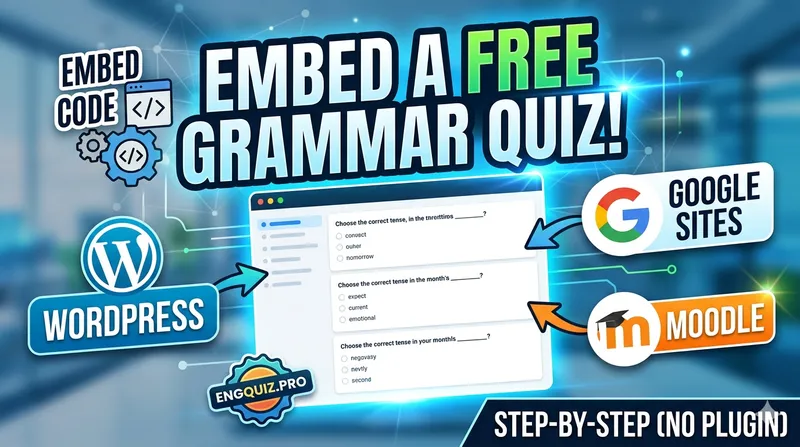
How to Embed a Free English Grammar Quiz on Your Website (WordPress, Google Sites, Moodle)
Step-by-step instructions for adding a free, interactive English grammar quiz to WordPress, Google Sites, Moodle, or any page that accepts HTML. No plugin, no sign-up, no ads.
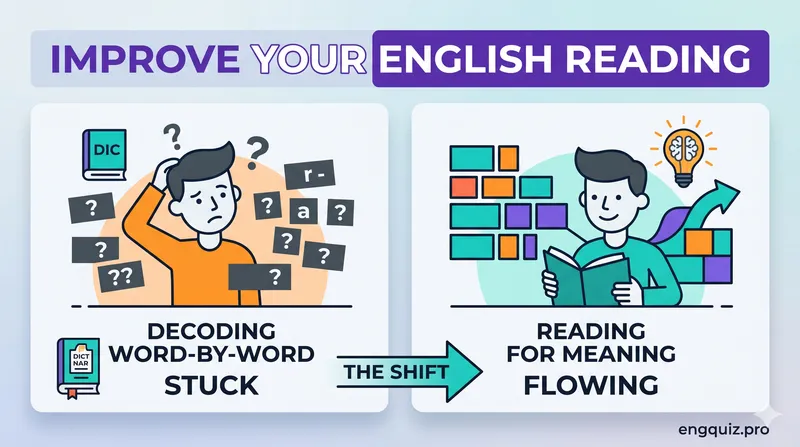
How to Improve English Reading and Actually Understand It
Why the level of the text you choose matters more than the hours you put in, and five exercises that build reading comprehension.
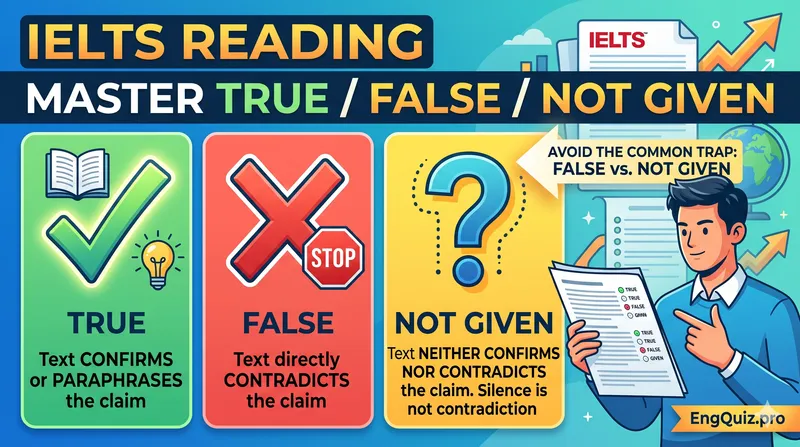
IELTS Reading: How to Master True/False/Not Given
True/False/Not Given is the most-failed IELTS Reading task. Learn the one rule that fixes it, and practise free on real B2/C1 passages with instant feedback.
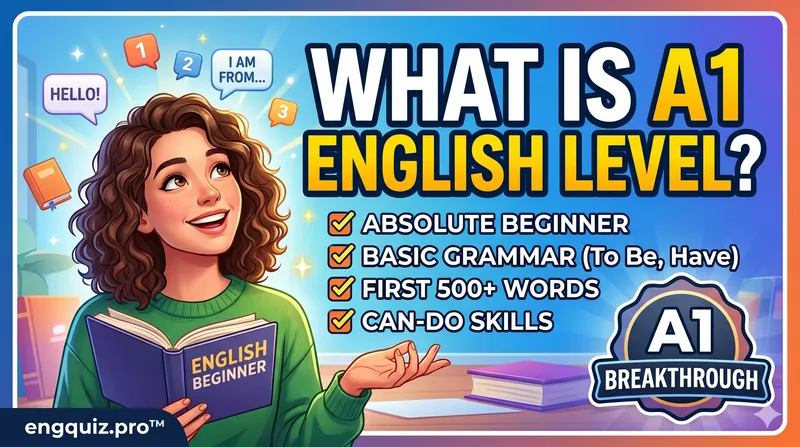
What Is A1 English Level? Skills, Grammar & First Words
A1 is absolute beginner English at the start of the CEFR scale. Learn what A1 means, the first grammar and words, and how long it takes to reach A2.
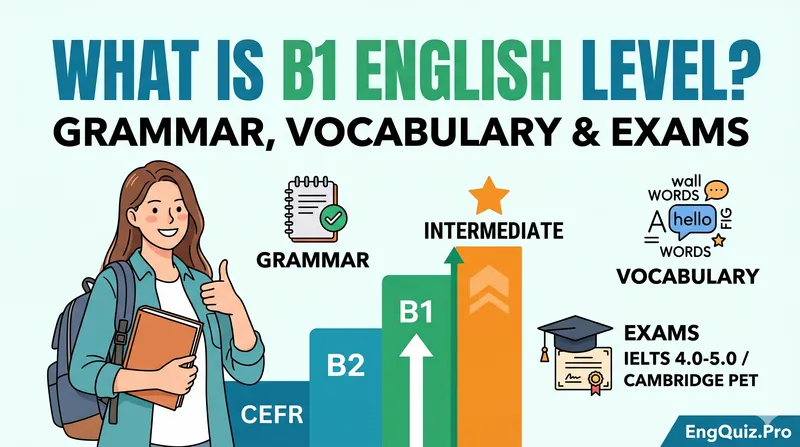
What Is B1 English Level? Grammar, Vocabulary & Exams
B1 is intermediate English: the level where you stop surviving and start communicating. Learn B1 grammar, vocabulary, exam scores, and how to reach it.
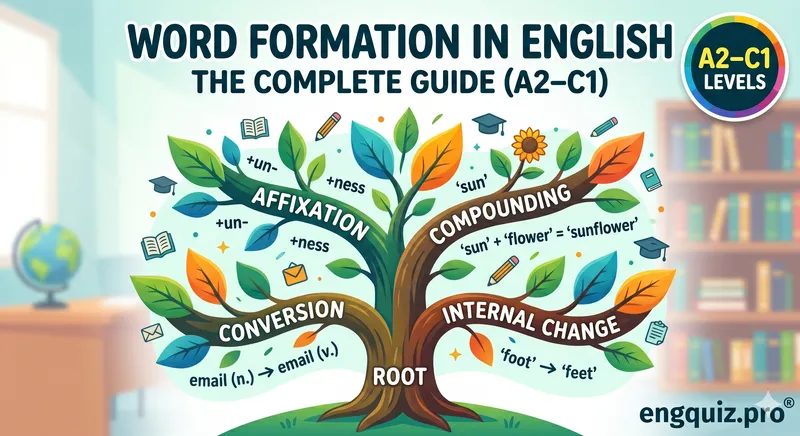
Word Formation in English: The Complete Guide (A2-C1)
Word formation in English explained: affixation, compounding, conversion and internal change, plus how each type maps to CEFR levels A2 to C1.
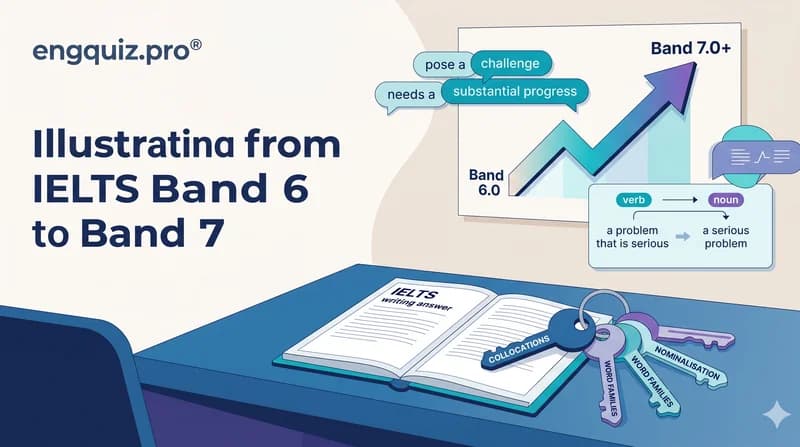
Academic Vocabulary for IELTS Writing: How to Move From Band 6 to Band 7
Lexical Resource is 25% of your IELTS Writing score, and most learners attack it backwards. Here is what Band 7 vocabulary actually looks like, and how to get there.
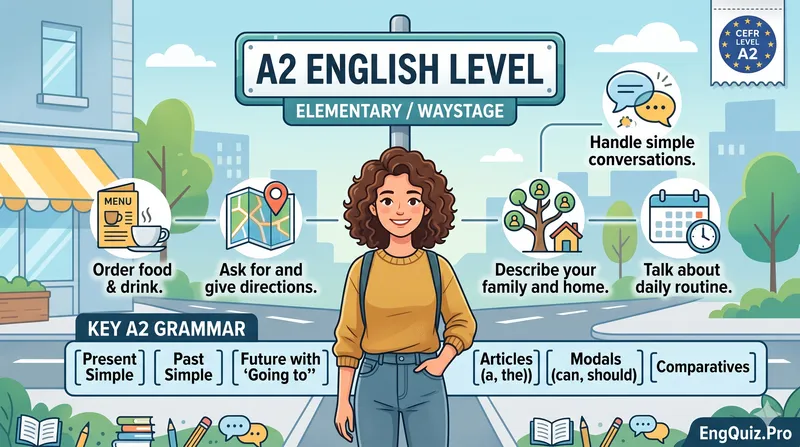
What Is A2 English Level? Grammar, Vocabulary & Exams
A2 is the elementary CEFR level: survival English for everyday situations. Learn A2 grammar, vocabulary, exam scores, and how long it takes to reach it.
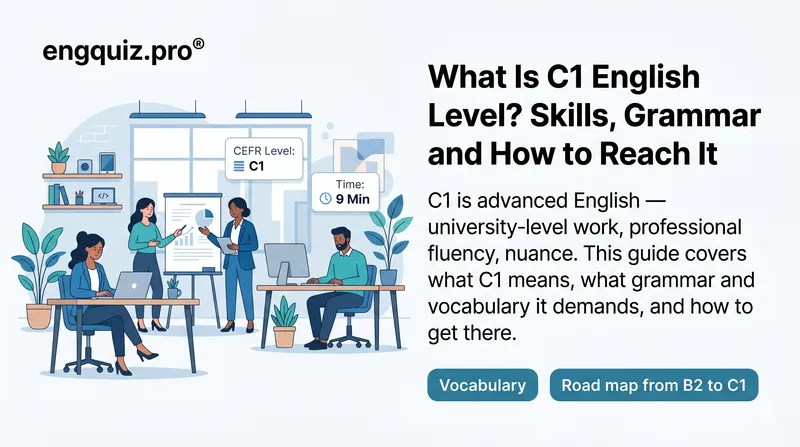
What Is C1 English Level? Skills, Grammar and How to Reach It
C1 is advanced English: university-level work, professional fluency, nuance. This guide covers what C1 means, what grammar and vocabulary it demands, and how to get there.
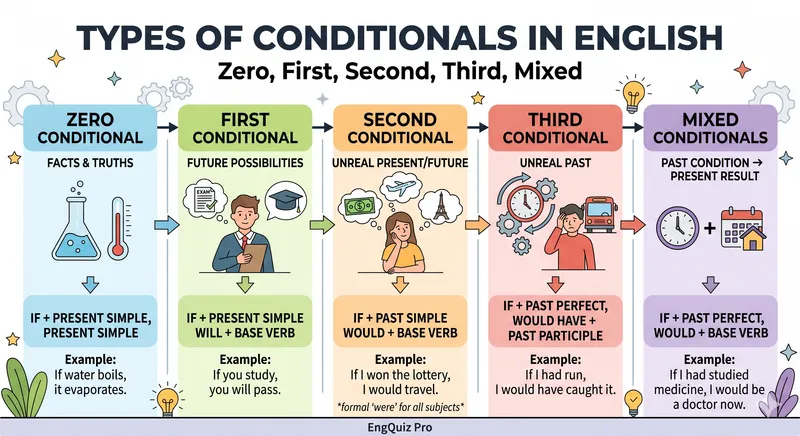
Types of Conditionals in English: Zero, First, Second, Third and Mixed
The 5 types of conditional sentences explained with formulas, examples and common mistakes: zero, first, second, third and mixed conditionals.
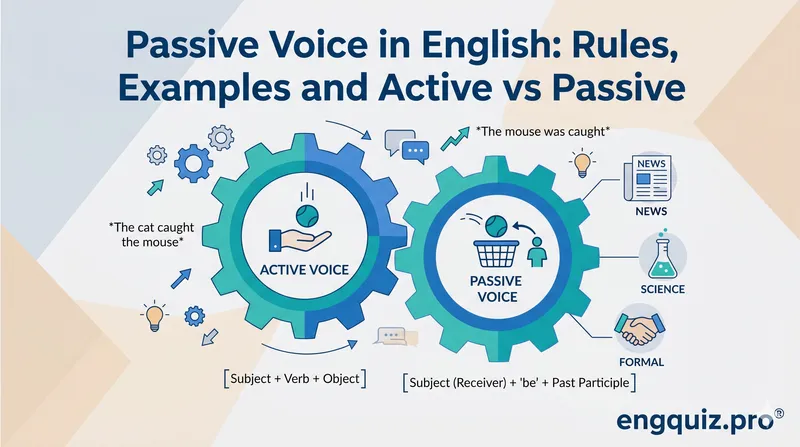
Passive Voice in English: Rules, Examples and Active vs Passive
The passive puts the receiver of an action first: "The letter was written." Learn to form it in every tense, when to use it, and 5 common mistakes.
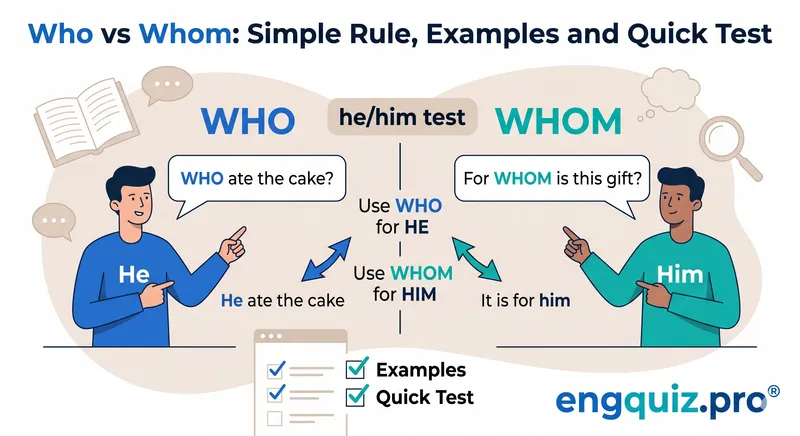
Who vs Whom: Simple Rule, Examples and Quick Test
Confused by who vs whom? Use the he/him test: if he fits, use who; if him fits, use whom. Examples, common mistakes and a 5-question quiz inside.