Make or Do: Complete Guide + 60 Collocations (A2-B1)
Make or do? Use make for creating something new; use do for tasks, work and activities. Includes full collocation lists, examples and a practice quiz.
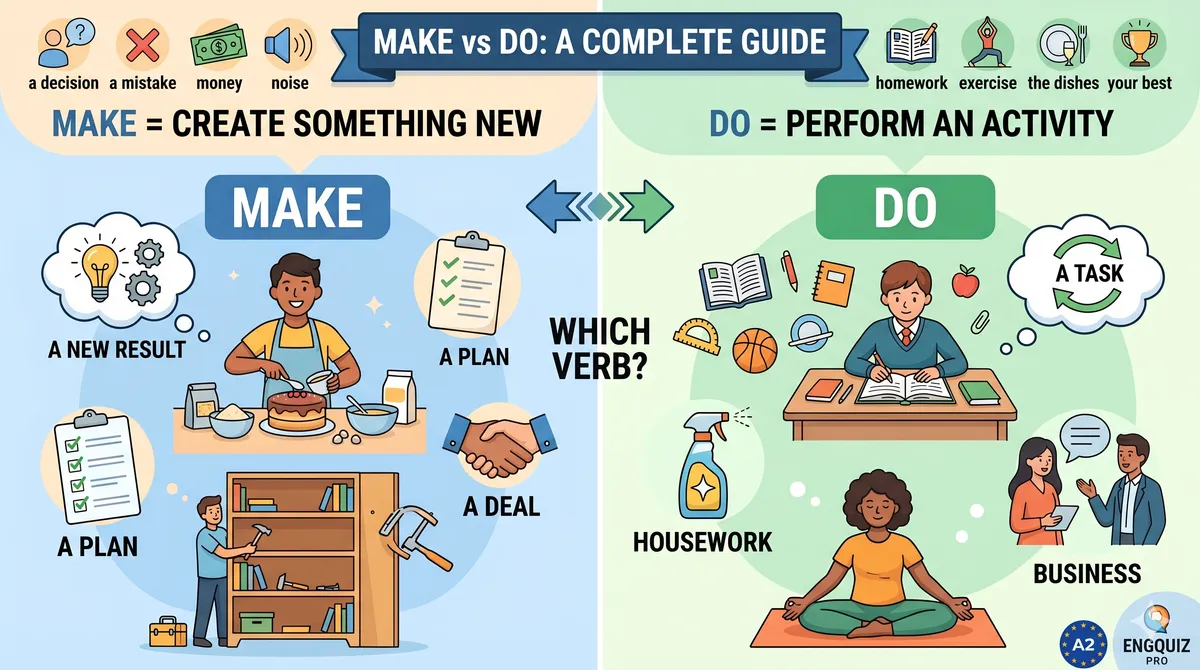
Make a decision or do a decision? Make homework or do homework? Make the dishes or do the dishes? These pairs are the single most common source of vocabulary errors for A2 and B1 learners, and once you stop translating from your first language the choice becomes automatic.
This guide gives you the underlying rule, then the four high-frequency collocation lists that cover ~90% of real-world make/do usage. By the end you'll know exactly when to use each one, plus which fixed expressions you just have to memorise.
Quick answer: Use make when you create or produce something: a result, a sound, a decision, food. Use do when you perform a task, an activity or an action: work, homework, the dishes, exercise. Both are extremely common in English and they almost never overlap, so getting the right one matters.
The Core Difference
The clearest way to remember the rule is to think about what each verb produces:
| Verb | Core meaning | What it produces |
|---|---|---|
| make | create / construct / cause to exist | a thing, a result, a change |
| do | perform / carry out / engage in | an action, a task, an activity |
Test: ask yourself: am I producing something new (make), or am I performing an activity (do)?
- I'm making a cake. → A cake exists at the end. (make)
- I'm doing my homework. → An activity is being performed. (do)
- She made a mistake. → A new (unfortunate) outcome exists. (make)
- She did her best. → She performed an action. (do)
- He makes a lot of money. → Money is produced. (make)
- He does business in China. → Activity / engagement. (do)
This rule covers ~70% of cases. The other ~30% are fixed collocations: pairs that have to be memorised because the link to the rule is weaker. We'll cover those next.
When to Use Make
1. Creating, producing or building something
- make a cake / a meal / breakfast / coffee
- make a film / a song / a website
- make a chair / a dress / a model
Anything that physically exists at the end of the action.
2. Producing a result, decision or change
- make a decision (= decide)
- make a choice (= choose)
- make progress (= advance)
- make a difference / an impression / an impact
- make a profit / a loss / money
These are abstract results, but they all come into existence because of an action.
3. Producing speech, sound or noise
- make a noise / a sound / a comment / a remark
- make a speech / an announcement / a confession
- make a phone call
- make a joke / a suggestion / a complaint
When the result is something said or heard, English uses make.
4. Producing emotions or causing reactions
- make someone happy / sad / angry / nervous / tired
- That song makes me cry.
- She made him laugh.
Causative make + adjective is one of the most common A2/B1 patterns.
5. Producing arrangements and plans
- make an appointment / a reservation / a booking
- make a plan / a list / a schedule
- make a deal / a contract / an agreement
The agreement, list or appointment did not exist before; you produced it.
When to Use Do
1. Performing work, jobs and tasks
- do work / a job / a task
- do homework / housework / chores
- do the laundry / the dishes / the cleaning / the cooking
- do business
Anything that is a task or responsibility.
2. Performing activities (especially with -ing nouns or general words)
- do exercise / sport / yoga / karate
- do research / a study / an experiment
- do something / nothing / anything / everything
- What are you doing?
The verb do is the default when the action itself is the focus, not the product.
3. Studying or working in a field
- do a course / a degree / a master's
- do maths / history / chemistry (as in I'm doing maths at university)
- do a test / an exam
In British English especially, do describes which subject or qualification you are pursuing.
4. Fixed expressions
A handful of common do-collocations don't follow the rule and just need to be memorised:
- do your hair / your nails / your makeup
- do the shopping (BrE) / make the shopping list
- do a favour
- do harm / damage / good
- do your best
- do time (slang for serving a prison sentence)
Side-by-Side: Make vs Do in Common Contexts
| Context | make | do |
|---|---|---|
| Decisions | make a decision | – |
| Mistakes | make a mistake | – |
| Phone calls | make a phone call | – |
| Money | make money | do business |
| Food | make breakfast | do the cooking |
| Cleaning | – | do the dishes / laundry |
| Studies | – | do a course / a degree |
| Sport | – | do exercise / do yoga (but play football) |
| Work | – | do a job / do work |
| Promises | make a promise | – |
| Plans | make a plan | – |
| Damage | make a mess | do damage |
Notice: make a mess (you create the mess) vs do damage (you perform an action that has a destructive effect). The difference is which side of the cause-and-effect you're naming.
Common Mistakes
Mistake 1: Translating from L1 word-for-word
I will do my homework now.✓ (correct in English)I will make my homework now.✗ (calque from Spanish hacer la tarea, French faire les devoirs)
In many languages, one verb covers both make and do. English splits them. Don't translate; memorise the English collocation.
Mistake 2: Make a photo / make a picture
Can you make a photo of me?(German calque: ein Foto machen)
Why it's wrong: In English, photos are taken, not made.
✓ Can you take a photo of me?
Mistake 3: Make sport / make sports
I make sport three times a week.(French calque: faire du sport)
Why it's wrong: Sport is performed, not produced.
✓ I do sport three times a week. ✓ (more natural) I exercise three times a week.
Mistake 4: Do a decision / do a choice
I have to do a decision.
Why it's wrong: Decisions are produced, not performed.
✓ I have to make a decision.
Mistake 5: Do a mistake
Don't do mistakes.
Why it's wrong: Mistakes are produced by an action.
✓ Don't make mistakes.
Mistake 6: Make the dishes
I'll make the dishes after dinner.
Why it's wrong: Washing the dishes is a task, so it's do territory. (Though you might make a dish in the sense of cooking a dish: that's about creating food.)
✓ I'll do the dishes after dinner.
Top 30 Make Collocations (Memorise These)
| Collocation | Meaning / example |
|---|---|
| make a decision | decide |
| make a mistake | err |
| make a choice | choose |
| make a plan | plan |
| make a phone call | call |
| make a promise | promise |
| make an appointment | arrange a meeting |
| make a reservation | book |
| make progress | advance |
| make money | earn |
| make a profit | profit |
| make a noise | be loud |
| make a sound | sound |
| make a speech | speak publicly |
| make a comment / remark | say something |
| make a suggestion | suggest |
| make a complaint | complain |
| make a confession | confess |
| make a joke | joke |
| make a difference | matter |
| make an impression | impress |
| make an impact | impact |
| make an offer | offer |
| make a deal | agree |
| make a list | list |
| make sense | be logical |
| make up your mind | decide |
| make a friend | befriend |
| make a fortune | get rich |
| make breakfast / lunch / dinner | cook |
Top 30 Do Collocations (Memorise These)
| Collocation | Meaning / example |
|---|---|
| do homework | study at home |
| do housework | clean the house |
| do chores | small household tasks |
| do the dishes | wash up |
| do the laundry | wash clothes |
| do the cleaning | clean |
| do the cooking | cook |
| do the shopping | go shopping (BrE) |
| do the ironing | iron |
| do work | work |
| do a job | perform a job |
| do business | trade |
| do exercise | exercise |
| do sport | play sports |
| do yoga / karate / judo | practise that activity |
| do research | research |
| do a study | study formally |
| do an experiment | experiment |
| do a course | study a course |
| do a degree / a master's / a PhD | study at university |
| do maths / history (etc.) | study (BrE) |
| do a test / an exam | take a test |
| do your best | try as hard as you can |
| do your hair | style your hair |
| do your nails | manicure |
| do your makeup | apply makeup |
| do a favour | help someone |
| do good / harm / damage | have a positive/negative effect |
| do nothing / something / anything | the action itself |
| do the trick | succeed |
Quick Reference
| Use… | When… | Example |
|---|---|---|
| make | You produce something new (object, result, decision, sound) | make a cake, make a decision, make a noise |
| do | You perform a task, activity or action | do homework, do exercise, do business |
| memorise | The collocation is fixed and doesn't follow the rule | do your hair, make the bed |
Practice Exercise
Fill in make or do:
- I have to ___ my homework before dinner.
- She ___ a beautiful cake for the party.
- Can you ___ me a favour?
- He ___ a mistake in the report.
- We need to ___ a decision soon.
- They ___ business in five countries.
- ___ your best!
- Don't ___ so much noise.
- I'll ___ the dishes after dinner.
- She ___ a phone call to her mother.
Show answers
- do · 2. made · 3. do · 4. made · 5. make · 6. do · 7. Do · 8. make · 9. do · 10. made
Practise Make vs Do Now
The fastest way to lock these collocations in is high-volume, mixed practice: flipping between make and do contexts until the right verb becomes automatic. EngQuiz Pro has free collocation exercises at A2, B1, B2 and C1 levels, all of which test make/do alongside other high-frequency verb-noun pairs.
→ A2 Collocations Multiple Choice → B1 Collocations Multiple Choice → B2 Collocations Gap Fill
For more on common A2/B1 errors (many of which are L1 transfer like the ones above), see our common English grammar mistakes post. For business-context vocabulary that builds on top of make/do, see business English phrasal verbs.
Make vs Do on the IELTS, TOEIC and Cambridge Exams
This contrast is a low-stakes test on every major exam: examiners aren't testing whether you can describe the rule, but whether the right collocation comes out automatically under pressure.
- Cambridge A2 Key / B1 Preliminary: multiple-choice gap-fill items test make/do in 5–10 questions per paper. The phrases that appear most often: make a decision, make a mistake, make a phone call, do homework, do the shopping, do business.
- IELTS Speaking Part 1: when asked about your routine, hobbies or studies, candidates who say I make sport or I do mistakes immediately score lower on Lexical Resource. Practise the natural alternatives until they're automatic.
- TOEIC Part 5 and Part 6: short context cues almost always tell you which verb fits. Watch for the noun immediately after the blank: decision, choice, plan, mistake → make; homework, work, business, exercise → do.
The Cambridge Dictionary entry on do or make is the cleanest single source for the full collocation list. For the broader vocabulary picture relevant to IELTS Writing Task 2, see our IELTS grammar structures post.
Frequently Asked Questions
Almost. The 80/20 rule: make = produce something new; do = perform an activity. The remaining ~20% are fixed collocations you have to memorise (do your hair, make the bed, do harm, make a fool of yourself).
Make the bed fits the rule loosely: you "create" the made-bed state. Do the laundry fits the rule cleanly, since laundry is an activity/task. The harder one is make the bed: historically the verb has been make in this context for centuries and is now fixed.
Very rarely. Two near-exceptions: (a) in some contexts, do a study and make a study are both acceptable (academic English prefers do/conduct/carry out); (b) for do/make a deal, make a deal is far more common, but do a deal exists informally.
Yes, they're the same question. Different language guides and search results phrase it both ways ("make or do", "make vs do", "do or make", "do vs make"), but the underlying rule and collocation lists are identical: make = produce something new; do = perform a task or activity.
Some differences exist. Do the dishes (AmE) vs do the washing-up (BrE). Do the shopping (BrE) vs go shopping (AmE preferred). The core rule is the same in both varieties.
Take often goes with measured actions: take a photo, take a test, take a break, take a shower. Get often signals a change of state: get tired, get ready, get older. None of them overlaps with make or do in a confusing way; they each have their own collocation territory.
New Articles

How to Embed a Free English Grammar Quiz on Your Website (WordPress, Google Sites, Moodle)
Step-by-step instructions for adding a free, interactive English grammar quiz to WordPress, Google Sites, Moodle, or any page that accepts HTML. No plugin, no sign-up, no ads.
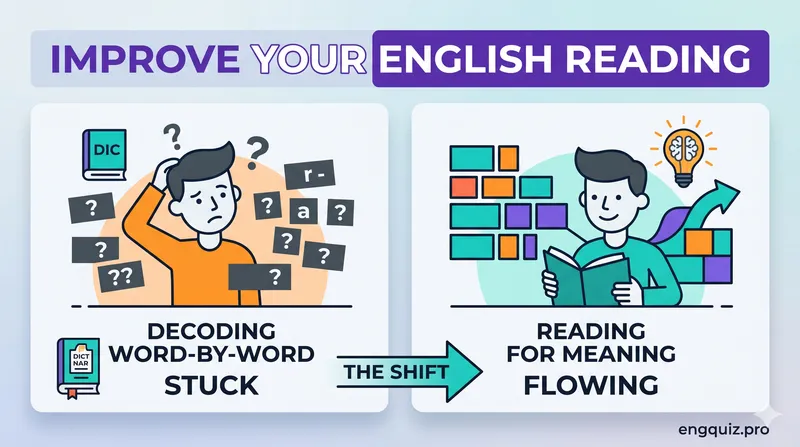
How to Improve English Reading and Actually Understand It
Why the level of the text you choose matters more than the hours you put in, and five exercises that build reading comprehension.
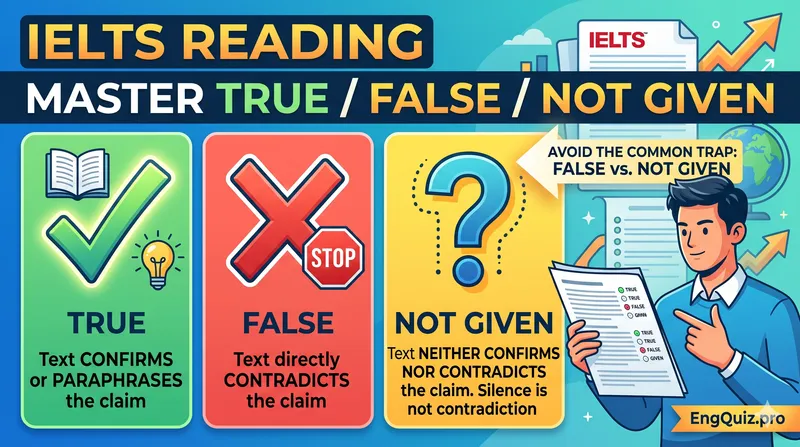
IELTS Reading: How to Master True/False/Not Given
True/False/Not Given is the most-failed IELTS Reading task. Learn the one rule that fixes it, and practise free on real B2/C1 passages with instant feedback.
Related Articles
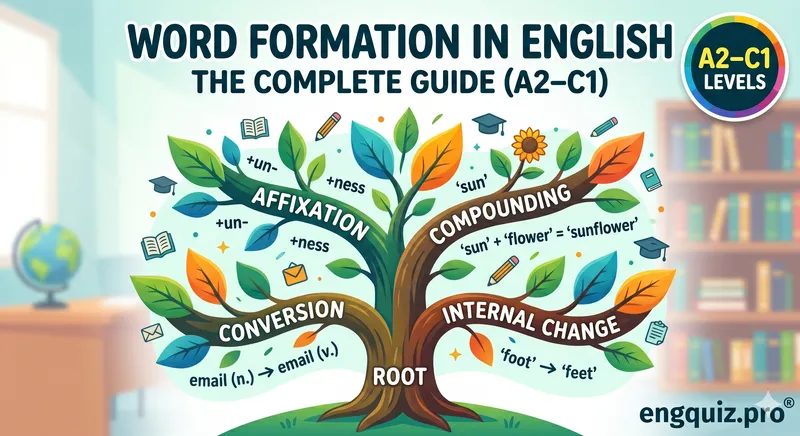
Word Formation in English: The Complete Guide (A2-C1)
Word formation in English explained: affixation, compounding, conversion and internal change, plus how each type maps to CEFR levels A2 to C1.
20 Essential Business English Phrasal Verbs (With Examples)
Business English phrasal verbs you will hear every day in meetings, emails, and calls. Learn the 20 most important ones with real workplace examples.